
October 13, 2026
Short answer: “Marry the house, date the rate” means your client commits to the right home now and treats the rate as temporary — refinancing later if rates improve. The move for loan officers is to make the cost of waiting visible: rent paid, equity not built, and the risk that prices or competition rise. Waiting feels free, but it rarely is. Buying now with a plan to refinance keeps the client’s options open.
Why “waiting” feels free but usually isn’t
When a client says they’ll wait for a better rate, they’re weighing a known cost (today’s payment) against an imagined benefit (a lower rate later). What’s missing from that math is the cost of waiting itself. Every month a client sits out, they’re typically paying rent or an existing mortgage without building equity in the home they actually want, and they’re exposed to whatever happens to prices and inventory in the meantime.
There’s also no guarantee the wait pays off. Rates may fall, hold, or rise. Prices often move in the opposite direction of rates — when rates dip, more buyers return and competition heats up, which can erase the monthly savings a lower rate would have delivered. The honest framing for your client isn’t “rates will drop, so wait.” It’s “we don’t control rates, so let’s make a decision we can control.”
Make the cost of waiting visible
Clients respond to concrete comparisons, not abstractions. Lay the two paths side by side.
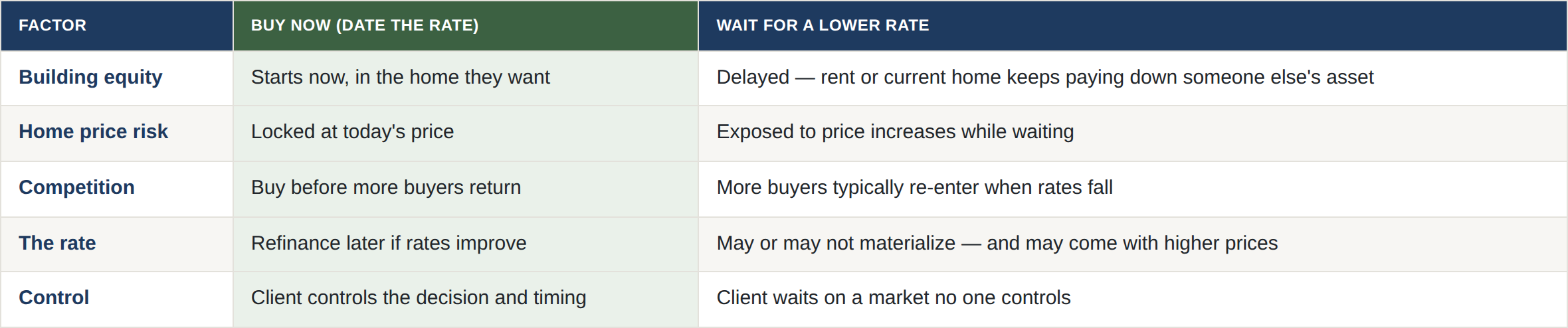
Then connect it to the home-financing picture your client already knows — the CFPB’s Loan Estimate shows the payment, taxes, and cash to close so the “buy now” column is grounded in real numbers, not a sales pitch.
The refinance option keeps doors open
The “date the rate” half of the phrase matters. Buying now doesn’t lock a client into today’s rate forever — if rates improve, they can refinance. That reframes the decision from “commit to this rate for 30 years” to “secure this home now, and improve the rate later if the market allows.” Pair this with the payment-first reframe: if you can make today’s payment comfortable, the refinance upside becomes a bonus, not a requirement.
For the full set of reframes, see the loan officer’s rate-conversation playbook.
Frequently asked questions
Isn’t it risky to tell a client they can just refinance later? Be careful with promises — frame it as an option, not a guarantee. “If rates improve, refinancing is on the table” is honest; “you’ll definitely refinance next year” is not.
What if the client genuinely can’t afford the payment now? Then waiting may be reasonable — but solve the payment first with structure, a buydown, or a seller credit before concluding they have to wait. Affordability problems have more solutions than clients assume.
How do I show the cost of waiting without scaring the client? Keep it factual and client-specific: their rent, their timeline, their target home’s price trend. You’re informing a decision, not pressuring one.
Does this apply to move-up buyers? Yes — and for them, waiting can also mean carrying a home that no longer fits. Their equity gives them a strong path to move now, which a later post in this series covers.
Help your clients act with confidence instead of waiting on the market. Explore Knock for loan officers, or revisit making the payment make sense.